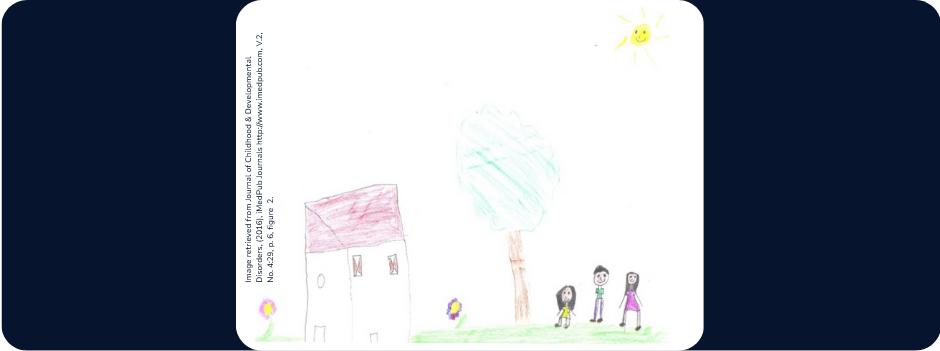
Experiences in family court have an impact on the immediate family and their relatives. Importantly, the views expressed by the court and its officials influence the family.
The three most important individuals see things differently and experience the family court matter differently. The complexities of the family court and potential impact on each person demonstrate the need for the Family Prism Approach.
Why is this important?
Different factors are considered by the court when determining parenting plans, including the child’s needs, finances, geographical logistics, and parental resources.
The causes of the PCCP may stem from court-associated or parent-specific circumstances, including domestic violence (DV) and intimate partner violence (IPV) (Sullivan et al., 2024).
Family Prism aspects
Taking into consideration the influence of family court and ancillary personnel, the Family Prism Approach identifies the needs and experiences of the family members while considering the rulings of family court and potential options for helping each member of the family.
Ascribing a child’s emotional reaction to leaving one parent as not wanting to go to their other parent could be interpreted as a “resist-refusal” behavior, potentially impacting court rulings (Garber, 2020) and leading to negative outcomes for the child (Judge & Deutsch, 2016; Warshak, 2020).
Other factors may include a parent who is struggling with mental or physical health problems, or is deemed as lacking sufficient parenting skills by court professionals (Neilson, 2018b).
In essence...
The court considers different factors when determining parenting arrangements.
Speaking to the complexity of family court matters, among family court cases, approximately 10% are considered high-conflict (Birnbaum & Bala, 2010; Rosenfeld, 2020). This further supports the need to taking a Family Prism Approach to best help families.
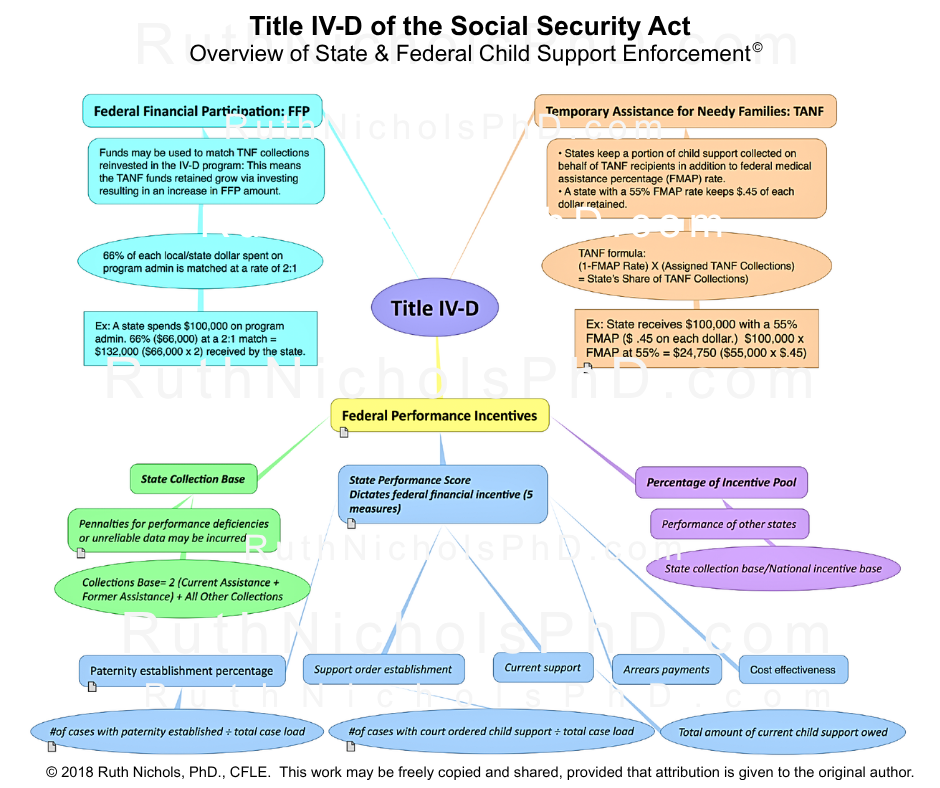
Title IV-D of the Social Security Act , which governs child support guidelines nationwide, was passed into law on January 4, 1975.
What is the purpose of Title IV-D?
The intention of the program was to centralize the child support process, including the collection of child support, among the states.
How are the states involved?
While the states may have lost individual power over child support, the program reimburses each state for child support collection efforts based on performance in five areas establishing and enforcing child support collections, paternity establishment, parent-locator services, and collecting/distributing child support.
Has the program changed over the years?
Over the years, 43 amendments and several program evaluations have revised the child support collections system, however, the federal-state program maintains its authority over the process.
In essence...
Title IV-D is a federal-state program that provides Child Support Enforcement (CSE). States provide child support collections and are reimbursed by the federal government.
States participate in an incentive pool and receive funds based on performance in the five areas including:
Over the years, the program has evolved. Amendments to Title IV-D of the Social Security Act aim to enhance the efficiency of child support collection processes.
The Bradley amendment prohibits the retroactive modification of child support arrearages. It prevents states from making retroactive changes to child support.
For a child to form and maintain a quality attachment to a parent, it is necessary for that child to spend time with their parent regularly (Garber, 2004).
Bowlby (1969) suggested that attachment develops when a child experiences a sense of safety and security, stemming from their innate need for closeness to their primary caregiver.
Family court matters influence the everyday lives of family members at multiple levels. This article outlines the situations that many families experience.